
Life as Prose or Equation
The choice is yours

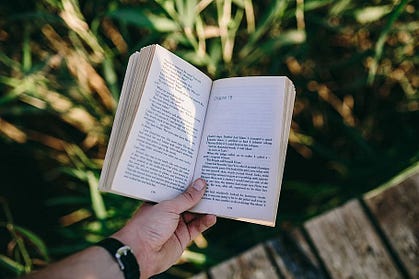
A Novel
I seldom read novels 📚; I read so much philosophy and political analysis that there’s little time or room for them. My spouse often says that she needs a story; so she reads many novels, always deep and usually obscure novels. She knows how to savor the tales they tell and live within the worlds they paint.
Another reason I seldom read novels is that my spouse, while reading those many novels, delivers ongoing reports about the plots and characters of the world in which she is currently traveling. Pausing my tasks to hear her reports can be inconvenient at times but they are always enlightening. Plus, it’s always endearing to partake in her eagerness to share these worlds with me, a sign of her love of beautiful writing and of me.
Sometimes she will insist I read a particularly good novel, or I will — intrigued by her reports — ask her to stop her reports and reading of passages so I can travel to these worlds 🌎. Such a sequence of events has led me to the world of Spaceman of Bohemia by Czech author Jaroslav Kalfař. It’s a highly original, deep, complex philosophical story. There’s a movie transfiguration of the novel that is now out, but the combination of Netflix and Adam Sandler gives me no confidence that the adaptation is faithful to the original. The book is very much worth reading.
I will say nothing about the novel — the title is clue enough — except to say that the story contains a wealth of insights into not only my adopted home of the Czech Republic but life, purpose, and meaning. I will share with you, dear reader, a life lesson of which this world of Pan Kalfař has reminded me.
Life Is for Living
We humans exist, but more crucially, we live. There’s a considerable difference between existing and living — a distance that not everyone is prepared to travel.
The spaceman in the novel is confronted with the opportunity to travel in outer space but more importantly within his inner space — to travel from existing to living. He faces the question of his existence, but this is no dour, cynical existentialist novel. It is about life.
By the time I had completed the spaceman’s story, I had been reminded that a person’s life is, or at least can be, a story. Being a philosopher, and an existentialist of the not dour or cynical kind, I recognize that we are continually confronted with a particular dilemma. How much of our life is what happens to us and how much do we make our lives what we want it to be?
A good novel (and good philosophy) is told in prose — it travels and unfolds a story that expands the horizons of the characters and the readers. A good life is prose — a life well lived that travels and creates a story that expands the horizons of yourself and those with whom you interact. Prose works with and responds to the irregularities and vagaries of life. Prose is imaginative, vibrant, and playful.
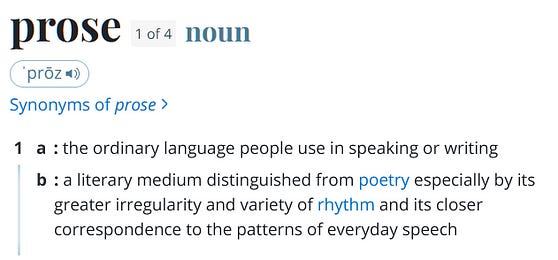
Living life as prose is being a participant in our lives. It is being aware that you are within a story called reality — a story in which you don’t have complete control — but at least you get to write your own character within that story.
Prose, not Equations
The spaceman came to realize that he was merely existing. He had allowed life to happen to him. He was a scientist who lived according to equations because he had settled for the default Western belief that people had to conform to equations and clocks.
What do I mean by equations and clocks in this context? Both are ways of giving in to the illusion of control — sacrificing the substance of agency for the veneers of regularity and regimentation.
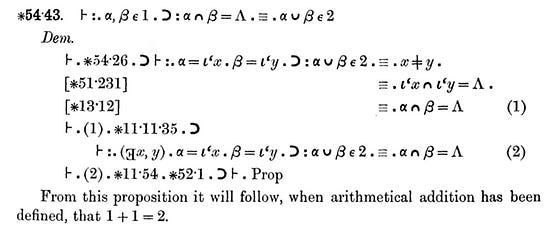
Living according to equations is pretending that everything is predictable. It is living as though you are a passive variable in a process that happens to you. Equations are good for describing the motion of material bodies and solving mechanical problems.
But, as philosopher Søren Kierkegaard observed, life is not a problem to be solved but a reality to be experienced. Equations aren’t alive, and trying to cram your life into equations is reducing yourself to a static thing leading to someone else’s conclusion. You merely exist, life is what happens to you, and you are not living. That’s living a lie when the truth is that you are an individual with your own unique experiences and your own independent free will.
The Most Important Lesson I Learned from Philosopher Søren Kierkegaard
Everyone is different, and everyone has different experiences. - medium.com
Living according to equations is letting structure dictate your life to you. A measure of structure is good and necessary but there’s such a thing as too much of a good thing.
Clocks turn time into equations. Western society tells us to live according to the clock. It’s its way of channeling our activities into the service of others. Capitalism didn’t invent that idea, but it maximized its profit potential. The clock rules our work day.
Trying to cram your life into clock time is to be continually beholden to others, reducing yourself to a beast of burden. You merely exist and others order you around. That’s living a lie when the truth is that you are real, but time is not — at least not in the same way as clock time.
The Philosophy of Time
Perhaps the most mysterious aspect of existence - medium.com
The novel about the spaceman, the skinny human who went to space, is wonderful, inventive prose that embraces the prose of life. Writing, like every aspect of life, can be prose — imaginative, vibrant, and playful. Equations and clocks can be helpful tools, but they cannot be our mode of life. As the Prisoner declared, “I am not a number, I am a free man!”
Spaceman of Bohemia
Spaceman of Bohemia — Kindle edition by Kalfar, Jaroslav.
The link to the book is an affiliate link from which the author may receive a minuscule amount of compensation.
Too much of my life has been existing in a purely economic sense and in the relationships that have bounded it. I spent 32 years of life teaching high school, which meant 6 or 7 periods a day, 9 or 10 weeks per quarter times 4 and one academic year over. Rinse and repeat. At the same time, I learned much from my students as they and I met year after year and struggled with the rigid demands of nonsense curriculum standards while they and I wrestled with our lives outside the classroom. Now I sit in my modest library in the last home I will live in (unless I am disappeared) sending my reactive thoughts into this strange world I could not imagine when I drew my first breath. But for some time I have known that books are my best friends so I live in those imaginary worlds and continue to venture out in one that I can no longer recognize let alone explain (one reason for retiring from teaching). Be kind, love my wife, children, and grandchildren, play with my dog, and find a place to witness the implosion to come.
“There’s a considerable difference between existing and living — a distance that not everyone is prepared to travel.”
Nor is it a difference everyone is allowed to travel: those of us in the west with privilege would do well to remember that not everyone has the opportunity to make that journey